Lab Grown Diamonds · July 2026 · 12 min read
LAB GROWN VS NATURAL DIAMONDS: THE REAL DIFFERENCE (2026 GUIDE).
By Fenil Dhorajiya, Founder, Indiibot Technology LLP, Surat: the city that cuts 90% of the world's diamonds

By Fenil Dhorajiya, Founder, Indiibot Technology LLP, Surat: the city that cuts 90% of the world's diamonds
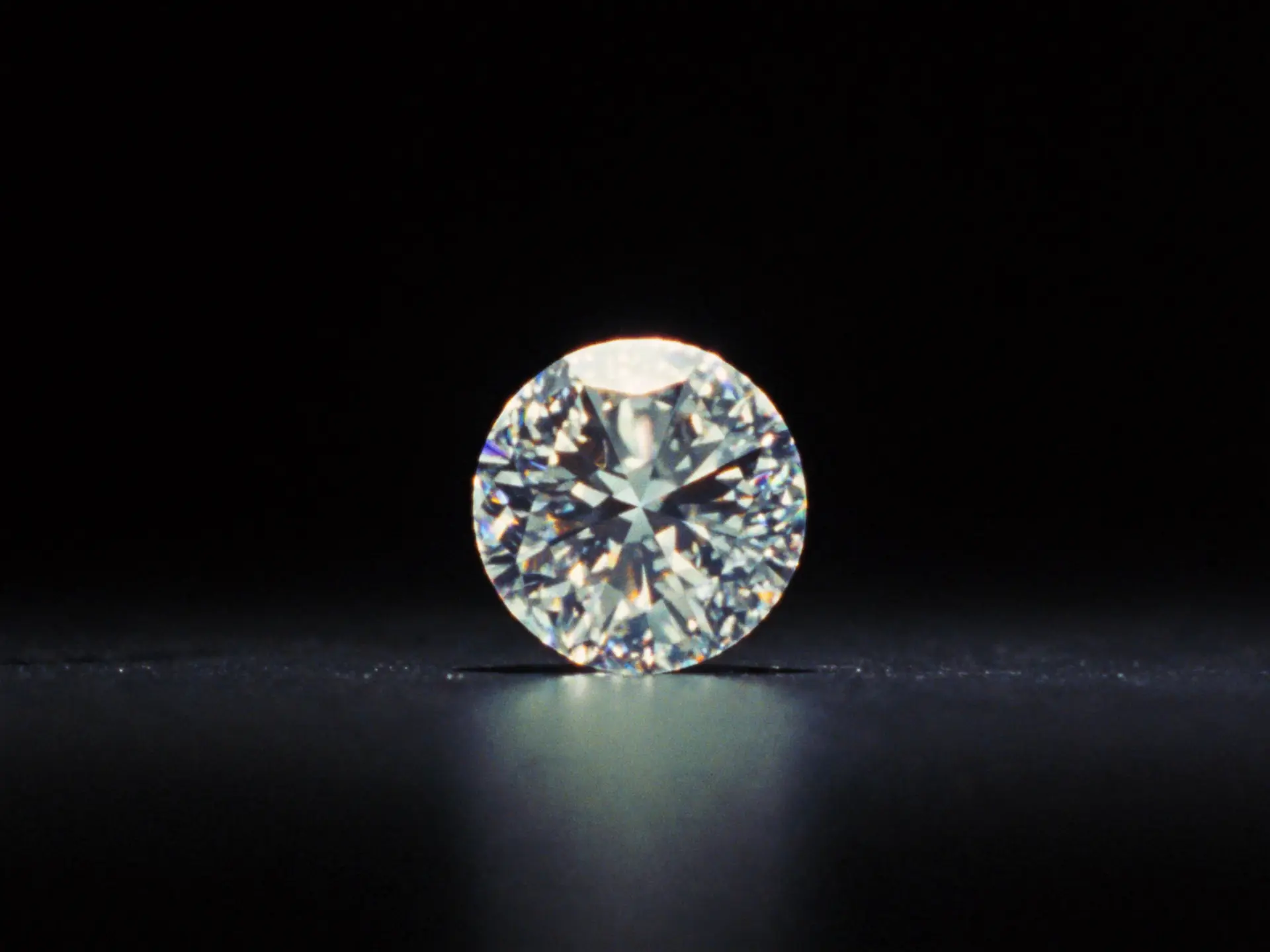
Google searches for "what's the difference between lab grown and natural diamonds" grew roughly 300% in the past year. Searches for "lab grown diamonds cost" grew 110%. And on 29 December 2025, Titan, the Tata company behind Tanishq, opened the first store of its lab grown diamond brand beYon in Mumbai.
Something big is happening in diamonds, and most of the answers online are either written by sellers pushing one side or copied from each other. I live in Surat, Gujarat, the city where roughly 90% of the world's diamonds are cut and polished, and where a large share of the world's lab grown diamonds are made. At Indiibot we have built 5+ lab grown diamond brands. This is the honest comparison, with real numbers.
Lab grown and natural diamonds are chemically, physically, and optically identical: both are pure crystallised carbon, hardness 10, same sparkle, same fire. The differences are origin (billions of years underground vs weeks in a reactor), price (lab grown costs 60 to 85% less), and resale value (natural holds value better, lab grown does not). Even a trained jeweller cannot tell them apart without lab equipment. Which one is right for you depends on budget, size priorities, and whether resale matters.
A lab grown diamond is a real diamond created above the ground. Manufacturers take a tiny diamond seed and grow it into a rough stone using one of two methods:
The result is not an imitation. Cubic zirconia and moissanite are imitations: different materials that try to look like diamond. A lab grown diamond IS diamond, atom for atom. The US Federal Trade Commission settled the debate back in 2018: a diamond is a diamond, whether it grew in the earth or in a lab.
Put a lab grown diamond and a natural diamond of the same grade side by side and ask a jeweller to pick the natural one by eye. They cannot. Not with a loupe either. The two stones have identical brilliance, identical fire, identical hardness, and identical clarity characteristics.
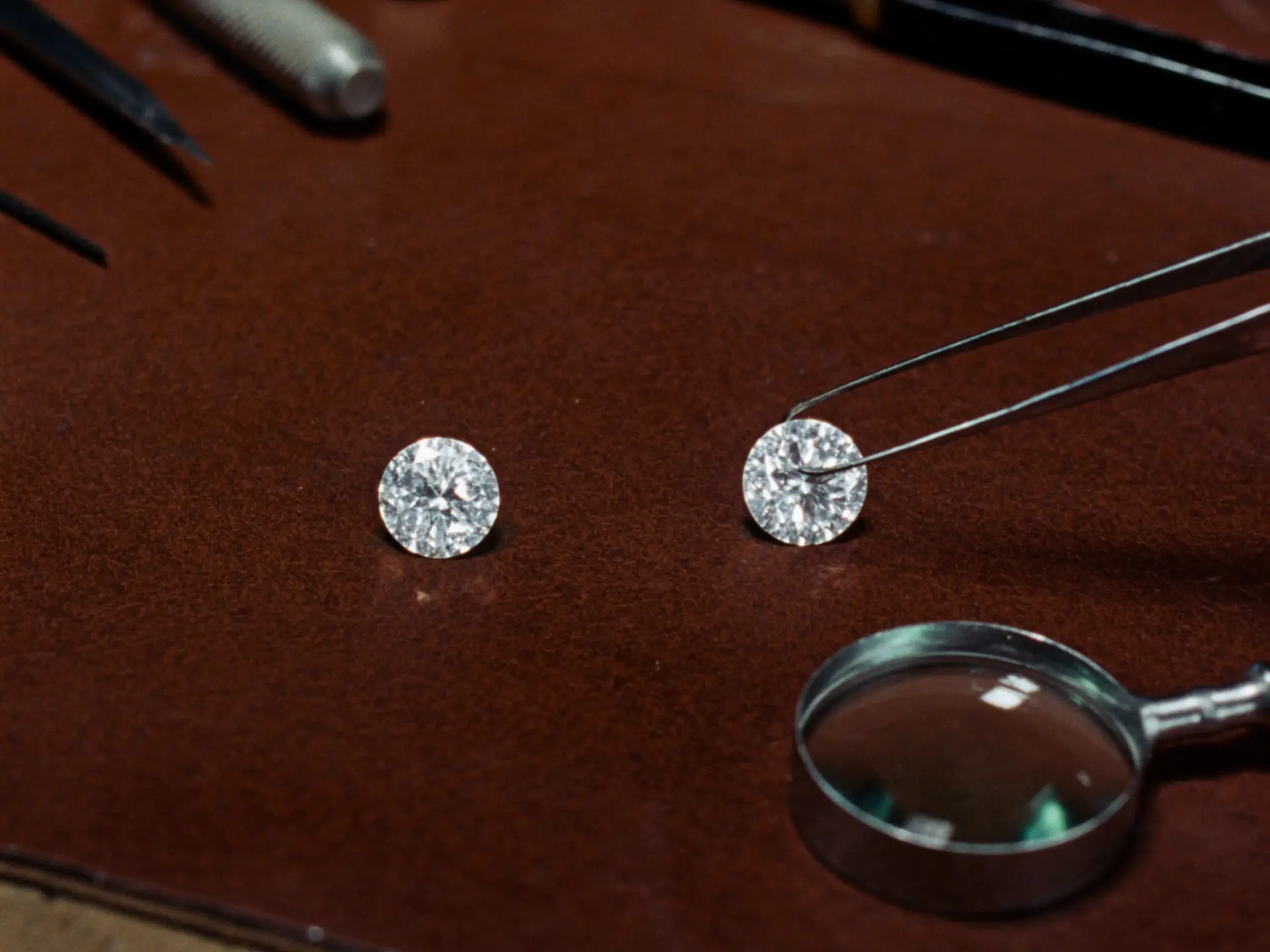
One of these is lab grown. The other is natural. Nobody can tell you which is which by looking, and that includes the person holding the tweezers.
The only way to separate them is specialised laboratory equipment that reads growth patterns and trace elements. This is exactly why certification matters so much in this category, and we will get to that below.
| Factor | Lab Grown Diamond | Natural Diamond |
|---|---|---|
| Chemical composition | Pure crystallised carbon | Pure crystallised carbon (identical) |
| Hardness | 10 on Mohs scale | 10 on Mohs scale (identical) |
| Sparkle, fire, brilliance | Identical | Identical |
| Origin | Grown in weeks by HPHT or CVD | Formed over 1 to 3 billion years underground |
| Price (same grade) | 60 to 85% lower | Benchmark price |
| Resale value | Weak, prices still falling | Holds value better |
| Certification | IGI (most common), GIA | GIA, IGI |
| Visible difference | None. Detectable only with laboratory equipment | |
| Rarity | Reproducible at scale | Finite, mined supply |
| Best for | Bigger stone per rupee, everyday fine jewellery, modern buyers | Heirlooms, tradition, value retention |
This is what most people actually want to know, and searches for "lab grown diamonds cost" are up 110% in a year because sellers rarely give straight numbers. Here are straight numbers for the Indian market in 2026:
The practical effect: for the same budget, a buyer can wear a 2 carat lab grown solitaire instead of a 0.5 carat natural one. That single fact is driving the entire category. Google search interest in "lab grown engagement rings" grew 31% this past year and hit its all-time peak in May 2026.
Here is what many lab grown sellers will not tell you, and what natural diamond sellers overstate.
Lab grown diamonds do not hold resale value. Production keeps getting cheaper, so the stone you buy today will cost less to produce next year. If you plan to resell, lab grown is the wrong purchase.
But context matters. Most retail buyers never resell their diamonds, and natural diamonds also lose 25 to 40% the moment they leave the showroom. In Indian jewellery, the reliable investment component has always been the gold, not the stone. So the honest framing is: buy lab grown for beauty, size, and budget. Buy natural for tradition, rarity, and better (not perfect) value retention. Neither is a stock market.
Since no human eye can separate lab grown from natural, paper does the job. Two names matter:
Every certified stone carries its report number laser-inscribed on the girdle, invisible to the naked eye. The rule for buyers is simple: no certificate, no purchase. Interest in IGI itself is a breakout search topic this year, which tells you buyers are learning fast.
When India's most trusted jewellery house walks into a category, the category stops being a question mark. Titan did not just launch a store, it validated lab grown diamonds for a hundred million households.
Fenil Dhorajiya, Indiibot TechnologyOn 29 December 2025, Titan opened the first beYon store in Mumbai, with Delhi announced next. Three details matter:
For buyers, this is pure good news: more trust, more options, more competitive prices.
If you make or sell lab grown diamonds, especially here in Surat, read this part carefully.
Titan entering the category is the best and worst thing that has happened to independent lab grown brands. Best, because beYon's marketing budget is educating your future customers for free. Worst, because "generic lab grown diamond seller" is now a dead position. When a Tata brand sits in the same market, buyers need a reason to choose you, and "cheaper" is not a brand, it is a race to zero.
The brands that will win the next three years are the ones that build now:
This is precisely what we do at Indiibot Technology. We have built lab grown diamond brands like Auric Charms (first organic order within 4 months of launch, zero ad spend) and worked with 5+ jewellery and LGD brands from naming to Meta Ads. If you want the full picture of how a lab grown brand gets built, read our lab grown diamond branding guide or the complete 8-phase jewellery brand playbook.
Choose lab grown if: you want maximum size and quality for your budget, you are buying for everyday wear or a modern engagement, you care about a certified real diamond but not about resale, and the idea of a 2 carat stone at a 0.5 carat price sounds like intelligence rather than compromise.
Choose natural if: you are buying an heirloom meant to pass down generations, tradition and rarity carry emotional weight in your family, or long-term value retention genuinely matters to your purchase.
Either way: demand the certificate, compare the 4Cs and not just the price tag, and buy from a brand that tells you the truth about both sides, the way this article just did.
Indiibot Technology LLP, Surat, India. We build lab grown diamond and jewellery brands end to end: strategy, naming, identity, packaging, photography, social media, ads, and web. One team, one brief.
Book a Free Strategy CallAre lab grown diamonds real diamonds?
Yes. They are pure crystallised carbon with the same structure, hardness, and sparkle as mined diamonds. The US FTC confirmed in 2018 that a diamond is a diamond regardless of origin. Cubic zirconia and moissanite are the imitations, not lab grown diamonds.
How much cheaper are lab grown diamonds?
60 to 85% cheaper than natural stones of the same grade in 2026. A 1 carat grade that costs Rs. 3 to 5 lakh natural can be matched lab grown for roughly Rs. 40,000 to 90,000 with an IGI certificate.
Can a jeweller tell them apart?
Not by eye and not with a loupe. Only laboratory equipment reading growth patterns can separate them, which is why every certified stone states its origin on the report and carries a laser inscription.
Do lab grown diamonds get cloudy or fade over time?
No. This is a myth. A lab grown diamond is as hard and as permanent as a natural one: hardness 10, forever. It will not cloud, fade, or lose its sparkle with wear.
Do lab grown diamonds hold value?
No, resale value is weak and prices keep falling as production scales. Buy lab grown for beauty and budget, natural for value retention, and remember that in Indian jewellery the gold is the real investment component.
What is Titan beYon?
Titan's dedicated lab grown diamond brand, launched in Mumbai on 29 December 2025 with Delhi next, kept separate from Tanishq to protect the flagship. Titan has publicly stated it aims for pole position in the category.
Is it a good time to start a lab grown diamond brand in India?
Yes, if you build a real brand. The category is growing about 20% a year and Titan has validated it, but generic sellers will be crushed. Positioning, identity, and content decide who survives, and that work should start now, not after beYon reaches your city.